Keeping the Books
Double entry to international standards, and the two questions a cash book cannot answer.
Most site owners do not want an accounting program. They want to know who still owes them money, and what he ordered — and those two questions are why this exists.
Why double entry and not a cash book
A cash book records money moving. It cannot tell you what somebody owes, because a debt is not a movement — it is the gap between an invoice and the payments put against it.
Every entry here has two sides that must agree, and it is refused if they do not: not warned about, refused. That single rule is what makes every report add up rather than nearly add up.
Owed is never stored
What a customer owes is computed every time it is asked: invoiced, less what has been allocated to those invoices. There is no "paid" flag anywhere, deliberately — a flag has to be kept true by something that runs, and it is wrong every time that thing does not run.
And two numbers are shown, not one: what is outstanding, and what has arrived and not yet been matched to a sale. Only the second can be acted on today.
What is never edited
A posted entry is not changed and not deleted — it is reversed, and both halves stay. Rewriting the original would leave a statement you have already printed disagreeing with the ledger it came from, and nobody could say which was right.
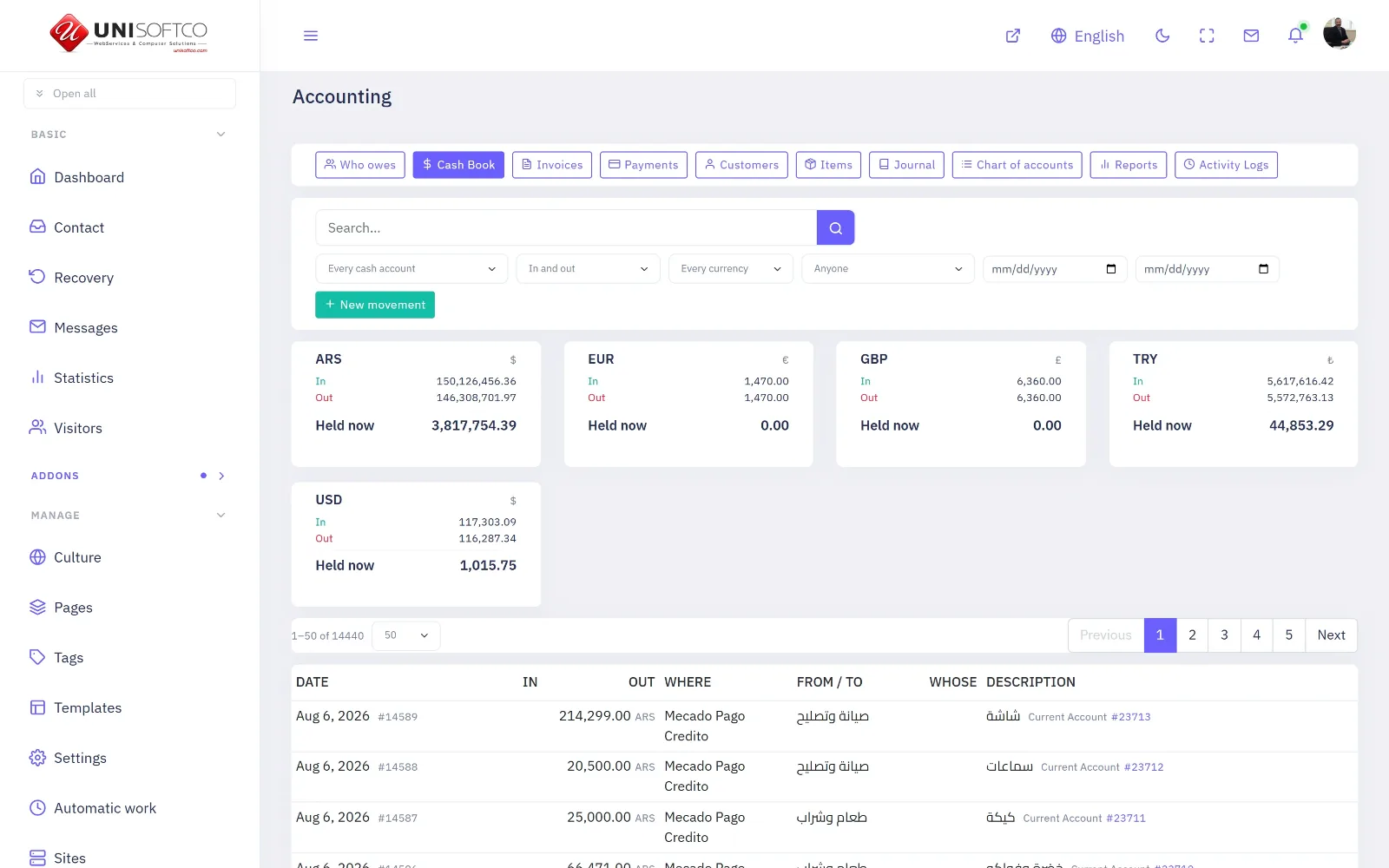
The Cash Book is the one screen most people live in: how much is held in each currency, what moved, and a form that writes either a balanced entry or an invoice depending on whether it was paid now or put on account.
Comments
Nobody has written yet. Be the first.